Irish Toll Roads vs European Highway Systems: Key Differences for Travelers

James Murphy
31 March 2026
Irish Toll Roads vs European Highway Systems: Key Differences for Travelers
Introduction
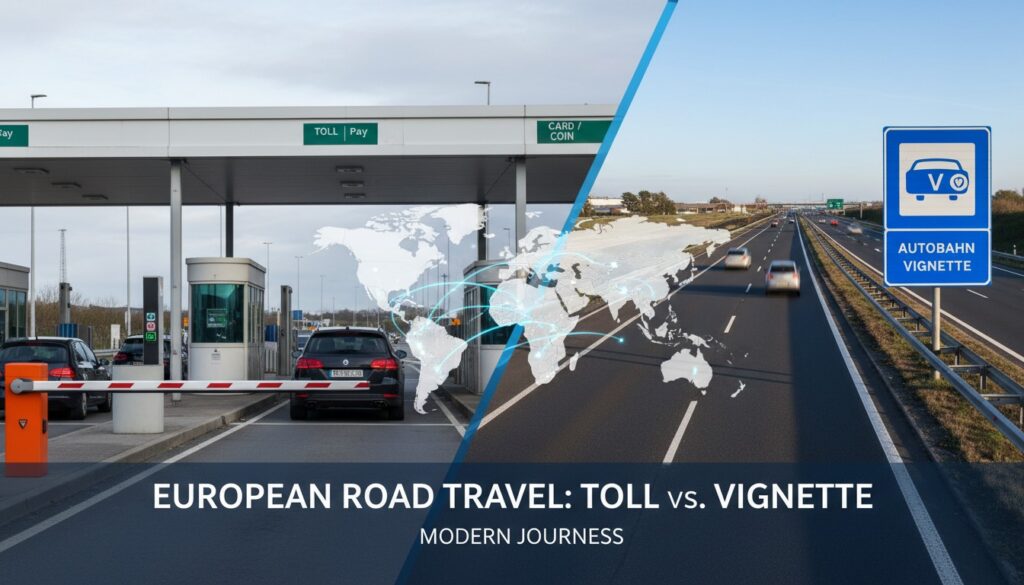
Planning a European road trip that includes Ireland? You’re in for a treat, but also a potential headache if you don’t understand the fundamental differences between Irish toll systems and continental European highway payment methods. While most of Europe operates on convenient vignette systems, Ireland marches to the beat of its own drum with individual toll plazas that can catch unprepared travelers off guard.
Understanding these differences isn’t just about convenience—it’s about avoiding hefty fines, legal complications, and travel disruptions that could derail your European adventure. Whether you’re a seasoned European driver or planning your first continental road trip, this comprehensive guide will equip you with the knowledge to navigate both systems confidently and cost-effectively.
The Irish Toll System: Pay-Per-Use Model
How Irish Toll Roads Work
Ireland operates on a pay-per-use toll system, fundamentally different from most European countries. When you encounter a toll road in Ireland, you’ll face one of several payment scenarios:
- Traditional toll plazas with manned booths and automatic barriers
- Electronic-only tolls like the M50 Dublin’s barrier-free system
- Mixed payment options accepting cash, cards, and electronic tags
- M50 Dublin Ring Road: €3.10 for cars (barrier-free system)
- M1 Drogheda Bypass: €1.90 for cars
- M3 Clonee-Kells: €1.90 for cars
- M4 Kilcock-Kinnegad: €2.90 for cars
- M7/M8 Portlaoise-Cullahill: €1.90 for cars
- M8 Rathcormac-Fermoy: €1.90 for cars
- Cash payments (exact change preferred)
- Credit/debit cards (widely accepted)
- Electronic tags (eFlow tag for frequent users)
- Contactless payments (increasingly available)
- Austria
- Switzerland
- Slovenia
- Bulgaria
- Romania
- Czech Republic
- Slovakia
- Hungary
- Slovenia (also offers digital option)
- 10 days: €9.60
- 2 months: €28.20
- Annual: €93.80
- Annual only: CHF 40 (approximately €37)
- 10 days: €11
- 1 month: €16
- Annual: €55
- Pay only for roads you actually use
- No upfront investment for short trips
- Transparent, per-journey pricing
- Unlimited highway access within validity period
- No stopping at toll booths
- Better value for extensive highway use
- M50 violations: €3 penalty fee initially, escalating to court proceedings
- Other toll evasion: Potential prosecution and significant fines
- Vignette violations: €120-300 immediate fines
- Rental car companies may charge administrative fees
- Some countries have roadside enforcement cameras
- Research your route using tools like ViaMichelin or Google Maps with toll information enabled
- Calculate vignette needs based on countries visited and duration
- Download relevant apps: eFlow for Ireland, various national apps for digital vignettes
- Prepare payment methods: Ensure cards work internationally, carry some cash
- Keep receipts for expense tracking
- Set phone reminders for M50 payments
- Consider an eFlow tag for multiple Irish trips
- Purchase vignettes at border crossings, gas stations, or online
- Properly display physical vignettes (specific positioning requirements)
- Keep purchase receipts throughout your trip
- `Tollsmart`: Route planning with toll cost calculations
- `eFlow`: Irish toll management
- `ASFINAG`: Austrian highway information
- `Vignette apps`: Country-specific digital vignette purchases
- Route optimization: Sometimes avoiding highways saves money without significant time loss
- Vignette sharing: If traveling with others, coordinate purchases
- Timing considerations: Short-term vignettes vs. toll-free alternative routes
- Rental car packages: Some include toll passes or vignettes
- Smartphone-based payments
- Automatic license plate recognition
- Integration with GPS navigation systems
- Cross-border payment harmonization
- Low-emission zone charges
- Environmental vignette categories
- Electric vehicle incentives
- Ireland requires active payment management, especially for the M50
- European vignettes need advance planning but offer unlimited access
- Cost-effectiveness depends on your travel patterns and route choices
- Legal compliance is crucial in both systems, with significant penalties for violations
Key Irish Toll Roads
Ireland’s toll network is relatively compact but strategically important:
Important Note: The M50 operates differently—you must pay by 8 PM the following day online, by phone, or at participating retailers. Failure to pay results in automatic penalty notices.
Payment Methods in Ireland
Irish toll roads offer multiple payment options:
European Vignette Systems: Time-Based Highway Access
Understanding Vignette Systems
Most European countries use vignette systems—essentially highway access permits that allow unlimited use of motorways for a specified period. This system is fundamentally different from Ireland’s pay-per-use model.
Countries Using Vignette Systems
Physical vignette stickers (must be displayed on windscreen):
Digital vignettes (license plate-based):
Vignette Pricing Examples
Austria:
Switzerland:
Czech Republic:
Pro Tip: Switzerland’s annual-only vignette policy can be expensive for short visits, but the country’s excellent road network and scenic routes often justify the cost.
Key Differences That Impact Travelers
Cost Structure Comparison
Ireland’s advantages:
Europe’s vignette advantages:
Planning Implications
For Ireland: Budget approximately €10-20 for toll costs on a typical cross-country journey. Plan routes considering toll locations and have payment methods ready.
For Europe: Calculate whether short-term vignettes offer value. A 10-day Austrian vignette costs less than three typical Irish toll payments but provides unlimited access.
Legal Consequences
Ireland:
Europe:
Practical Tips for Multi-Country European Travel
Pre-Trip Planning
During Your Trip
In Ireland:
In Europe:
Technology Solutions
Useful Apps:
Money-Saving Strategies
Regional Variations and Special Cases
Germany’s Unique Position
Germany stands out as toll-free for passenger cars on its extensive Autobahn network, making it a budget-friendly transit country between vignette nations.
France’s Mixed System
France operates toll booths similar to Ireland but on a much larger scale. Budget €50-100 for cross-country French highway travel.
Scandinavia’s Approach
Nordic countries generally avoid highway tolls, though specific bridges and tunnels may charge fees.
Eastern European Considerations
Countries like Poland are transitioning to electronic toll systems, while others maintain traditional approaches. Research current systems before travel.
Future Trends and Developments
Digital Integration
Both Ireland and European countries are moving toward:
Environmental Considerations
Many countries are introducing:
Conclusion
The contrast between Ireland’s pay-per-use toll system and Europe’s vignette-based approach reflects different philosophies toward highway funding and traffic management. Ireland’s system offers transparency and pay-as-you-go flexibility, while European vignettes provide unlimited access convenience for frequent highway users.
Key takeaways for travelers:
Successful European road trip planning means understanding these fundamental differences and preparing accordingly. Whether you’re navigating Irish toll plazas or purchasing Czech digital vignettes, knowledge and preparation will ensure smooth, cost-effective travels across Europe’s diverse highway systems.
Ready to Plan Your European Road Adventure?
Don’t let toll road confusion derail your European travel dreams. Start planning your route today using our recommended tools and apps. Research vignette requirements for your destination countries, download the eFlow app if Ireland’s on your itinerary, and consider signing up for our travel newsletter for more European driving tips and updates on changing toll systems across the continent.