The Complete Guide to Toll Roads in Ireland: Everything You Need to Know

James Murphy
31 March 2026
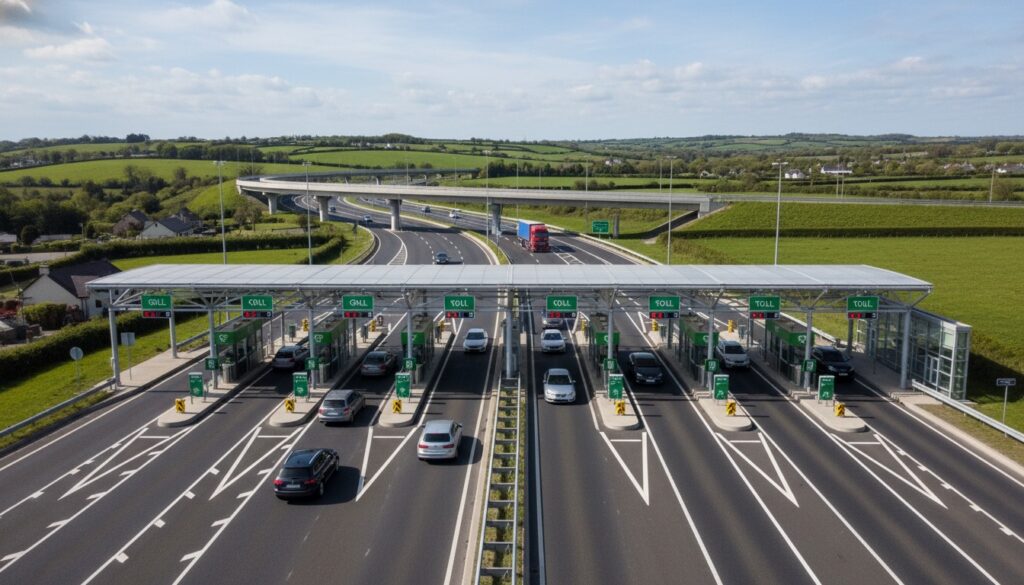
The Complete Guide to Toll Roads in Ireland: Everything You Need to Know
Introduction
Planning a road trip through Ireland’s stunning landscapes? Understanding the country’s toll road system is essential for a smooth journey across the Emerald Isle. Ireland operates several major toll roads that connect key cities and regions, but navigating the payment systems and costs can be confusing for first-time visitors and even locals.
This comprehensive guide will demystify Ireland’s toll road network, covering everything from payment methods and current costs to money-saving tips and route alternatives. Whether you’re driving from Dublin to Cork or exploring the Wild Atlantic Way, you’ll have all the information needed to travel confidently and budget effectively.
Overview of Ireland’s Toll Road Network
Ireland’s toll road system consists of eight major toll points strategically located on the country’s busiest motorways and key river crossings. Unlike many European countries that use electronic toll collection systems, Ireland operates a mix of barrier tolls and free-flow tolling.
The Major Toll Roads
M1 Gormanston to Monasterboice – This 37-kilometer stretch connects Dublin to the northeast, making it crucial for travelers heading to Belfast or exploring the Boyne Valley.
M3 Clonee to Kells – A 51-kilometer motorway that provides a vital link from Dublin to the northwest regions of Ireland.
M4 Kilcock to Kinnegad – This 36-kilometer section connects Dublin to the west, serving as a gateway to Galway and the western counties.
M6 Kilbeggan to Athlone – The 37-kilometer stretch is essential for cross-country travel and accessing Ireland’s Hidden Heartlands.
M7/M8 Portlaoise to Castletown/Portlaoise – Two separate toll points serving the busy Dublin to Cork corridor.
M50 West-Link Bridge – Dublin’s orbital motorway crossing the River Liffey, crucial for navigating around the capital.
Dublin Tunnel – The Port Tunnel connecting Dublin Port to the M1, primarily used by commercial vehicles but open to cars.
East-Link Bridge – Another Dublin river crossing connecting the city center to the southeastern suburbs.
Understanding Toll Classifications
Irish toll roads classify vehicles into different categories:
- Class 1: Cars, motorcycles, and small vans
- Class 2: Buses and larger commercial vehicles
- Class 3: Heavy goods vehicles and trucks
- Class 4: Vehicles with trailers and extra-large trucks
- Cash (exact change preferred)
- Credit and debit cards (Visa, Mastercard, American Express)
- Contactless payments (including mobile wallets)
- One-time setup fee: €5
- Reduced toll rates for tag users
- Automatic top-up options available
- €3 penalty if paid within 14 days
- €41 penalty if unpaid after 14 days
- €103 penalty if unpaid after 56 days
- M1 Gormanston-Monasterboice: €1.90
- M3 Clonee-Kells: €1.40
- M4 Kilcock-Kinnegad: €1.90
- M6 Kilbeggan-Athlone: €1.90
- M7 Portlaoise-Castletown: €1.90
- M8 Portlaoise-Cullahill: €1.90
- M50 West-Link: €2.10 (€1.90 with eFlow tag)
- East-Link Bridge: €2.00
- Dublin Tunnel: €10.00 (primarily for trucks; cars €3.10)
- Some companies provide eFlow tags for an additional daily fee
- Others require you to handle toll payments independently
- Always clarify who’s responsible for penalty charges
- eFlow.ie: Official M50 toll management
- AA Roadwatch: Real-time traffic and road conditions
- Transport Infrastructure Ireland: Official road information
- ParkingTag: For urban parking in major cities
- Distance: 265km
- Toll costs: €3.80
- Journey time: 2 hours 45 minutes
- Best for: Speed and convenience
- Distance: 285km
- Toll costs: €0
- Journey time: 3 hours 30 minutes
- Best for: Budget travel and scenic views
- Toll costs: €3.30
- Journey time: 2 hours 30 minutes
- Advantages: Faster, better road conditions
- Toll costs: €0
- Journey time: 3 hours 15 minutes
- Advantages: Passes through historic towns like Mullingar
Payment Methods and Systems
Traditional Barrier Tolls
Most Irish toll roads use traditional barrier systems where you stop at a toll plaza to pay. These accept:
Pro Tip: Always carry some cash as backup, especially during peak travel times when card readers may experience delays.
Electronic Toll Collection
The M50 West-Link operates a barrier-free system using overhead cameras to capture license plates. Payment options include:
eFlow Tags: Electronic tags that automatically deduct tolls from a prepaid account
Online Payment: Pay within 8pm the following day at www.eflow.ie
Phone Payment: Call the automated payment line
Retail Outlets: Pay at participating Payzone locations
Payment Deadlines and Penalties
For barrier-free tolls (M50), you must pay by 8pm the following day. Late payment results in:
Current Toll Costs (2024)
Understanding toll costs helps you budget effectively for your Irish road trip. Here are the current rates for Class 1 vehicles (cars):
Motorway Tolls
Dublin Area Tolls
Money-Saving Strategies
Get an eFlow Tag: Save €0.20 per crossing on the M50 and enjoy faster passage through other toll points.
Plan Alternative Routes: Use apps like Google Maps or Waze to find toll-free alternatives, though these may take longer.
Travel Off-Peak: While toll prices don’t vary by time, you’ll save fuel and time by avoiding rush hour traffic.
Bulk Payments: If making multiple trips, consider prepaying your eFlow account to avoid daily payment hassles.
Practical Tips for International Visitors
Rental Car Considerations
When renting a car in Ireland, discuss toll arrangements with your rental company:
Navigation and Route Planning
Use Irish-Specific GPS Settings: Ensure your navigation app is set to Ireland and updated with current toll information.
Download Offline Maps: Rural areas may have poor mobile coverage, so download offline maps before departing.
Plan Fuel Stops: Irish motorway service stations can be expensive; plan stops in towns when possible.
Essential Apps and Websites
Alternative Routes and Cost Comparisons
Dublin to Cork Route Options
Toll Route (M7/M8):
Alternative Route (N8/N25):
Dublin to Galway Comparison
Toll Route (M4/M6):
Alternative Route (N4/N6):
Consider This: The time saved on toll roads often justifies the cost, especially for business travel or when you have limited vacation time.
Common Mistakes to Avoid
Payment Errors
Forgetting M50 Payment: The most common mistake for visitors is forgetting to pay the M50 toll within the deadline.
Wrong Vehicle Classification: Ensure you’re paying the correct rate for your vehicle type.
Card Payment Issues: International cards occasionally face issues; always have cash backup.
Route Planning Mistakes
Underestimating Journey Times: Irish roads can be narrow and winding outside motorways.
Ignoring Weather Conditions: Fog and rain can significantly impact travel times.
Not Checking Road Works: Major construction can cause delays and diversions.
Future Developments
Ireland’s toll road system continues evolving:
Electronic Expansion: Plans exist to extend barrier-free tolling to other motorways.
Environmental Initiatives: Potential introduction of congestion charging in Dublin city center.
Infrastructure Investment: Ongoing motorway extensions and improvements funded through toll revenue.
Conclusion
Navigating Ireland’s toll road system doesn’t have to be complicated. By understanding the eight major toll points, payment methods, and current costs, you can travel confidently across the country. Remember that toll roads offer significant time savings and superior road conditions, often justifying the modest costs involved.
The key to stress-free toll road travel is preparation: set up payment methods in advance, budget for toll costs, and always have backup payment options. Whether you choose the speed of motorways or the charm of alternative routes, Ireland’s road network offers excellent access to the country’s incredible attractions.
Most importantly, don’t let toll concerns prevent you from exploring Ireland’s stunning landscapes, vibrant cities, and welcoming communities. With proper planning and this guide in hand, you’re ready to hit the road and discover everything the Emerald Isle has to offer.
Ready to Explore Ireland?
Now that you’re equipped with comprehensive knowledge of Ireland’s toll road system, it’s time to plan your Irish adventure! Download the eFlow app, map your route, and budget for tolls to ensure a smooth journey.
Have questions about specific toll roads or need route recommendations? Share your travel plans in the comments below – our community of Ireland travel experts is always ready to help fellow adventurers make the most of their Irish road trip experience.